Most people have some medicines at home, whether for headaches, allergies, stomach problems, infections or a long-term health condition. It is easy to believe that medicines in a drawer or cabinet are enough. But the way medicine is stored can affect its quality and safety.
Some medicines can be damaged by heat, moisture and direct sunlight, as well as poor storage habits. The real problem is that medicines that have expired or been forgotten are also accumulating at home. A little organization can help make medicines easier to use correctly and reduce the risk of taking something that should no longer be used.
Why It Is Important To Store Medicine Properly
Medicines are formulated to be stable under defined conditions. Some may lose their effectiveness when exposed to inappropriate temperatures, humidity or light. This is not always instantaneous, so improper storage is difficult to detect.
For example, a bathroom cabinet might seem like a convenient place to store medications, but the changing humidity from showers can make it unsuitable for many products. Medicines should not be kept near a stove, oven or sink as the kitchen can be a problem place.
Where you store your medicine best depends on the medicine. Always read the packaging and patient information leaflet that comes with your medicine as some medicines have specific storage requirements.
Avoid keeping medicines near heat and sunlight.
Medicines should normally be stored in a cool dry place and not in a place exposed to heat or direct sunlight. Do not normally leave medicines on a windowsill or next to a radiator. Do not leave medicines in a car for long periods.
In the warmer months, high temperatures are a particular concern. A medication that was stored in a hot vehicle may have been exposed to conditions beyond its recommended storage range.
This is one reason it is good to keep medicines in a steady place indoors, and not to move them around the house unnecessarily.
The fridge is not always the right place
The conventional wisdom is that medicines keep longer if they are kept cold. This is not true of every medicine.
Some medicines have to be kept in the refrigerator. Others can be damaged by very cold temperatures or moisture. The packing or instructions for a medicine will tell you if it needs to be stored in the refrigerator, and it should not be automatically put in the fridge unless this is stated.
Any medicines that do require refrigeration should be stored at the recommended temperature. They should also be kept separate from food as far as possible and protected from children gaining access to them accidentally.
Store Medicines in Their Original Container
It can be useful to take tablets and other medicines out of their original containers, especially if you are preparing a week’s supply. But the original packaging has useful information like the medicine name, strength, expiry date, storage instructions and other important details.
Keeping medicines in their original containers can also help to identify them correctly. This becomes particularly important when several medicines are similar.
If a medicine is put into another container for a specific reason, the identification and instructions should still be clear.
Regularly check expiry dates
Just because medicines look normal, they should not be kept indefinitely. The expiry date is based on the manufacturer’s prediction of how long the medicine will stay within its approved quality and stability limits when stored correctly.
A good habit is to check the medicine cabinet a couple times a year. Check for expired products, unused medications and packages that are long opened.
Some medicines also have a specific duration of use once opened. This applies to some liquids, creams, eye preparations and other preparations. Check the instructions rather than assuming the printed expiry date is the only date that matters.
Take Care With Liquid Medicines
Liquid medications may require special care, as they might have different storage directions to those of tablets or capsules.
When you open a liquid medicine you should observe the period of use prescribed. Measuring devices also need to be kept clean and used as per the instructions. Household teaspoons are not always appropriate for measuring medicine as their size can vary.
If a liquid has a different color, strange smell, separates unexpectedly or looks different to when first opened, it is best to check with a pharmacist or healthcare professional before use.
Store Medicines Safely Out of Children’s Reach
Medicine storage is not just protection of medicine. It is also to prevent accidental ingestion.
Children are naturally curious about brightly colored packages, bottles and tablets. Medicines should be put somewhere they can’t easily reach to. Packaging that is resistant to children can reduce risk, but it should not be considered child-proof.
Visitors and family members can also carry medicines in their bags or pockets. These should also be kept away from children.
A Simple Medicine Check at Home
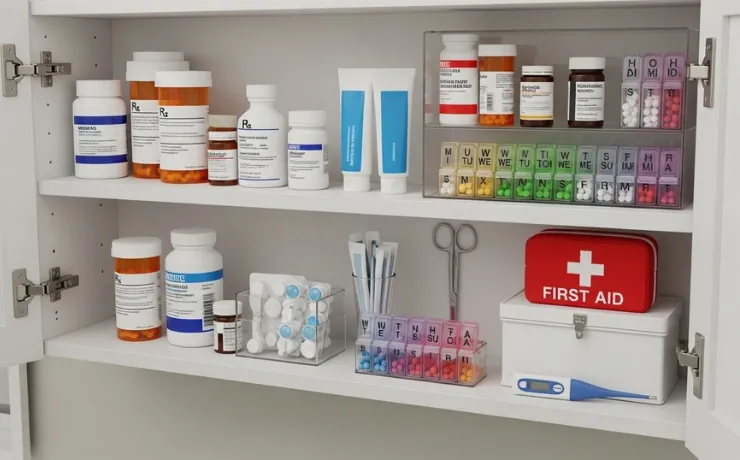
Medicine cabinets don’t have to be complicated. A simple system can make it much easier to know what is out there and what needs attention.
Keep medicines in a particular dry place and do not mix them with other household products unrelated to them. From time to time check expiry dates and separate medicines no longer needed.
It can also be helpful to keep current medications separated from products that are no longer in use. This means you are less likely to accidentally pick up an old medicine.
What to Do With Your Unused Medicines?
Old or unwanted medicines shouldn’t be kept around the home forever. They shouldn’t be disposed of in household waste or poured down the drain or toilet either.
How you should dispose of it is contingent upon the type of medicine and local regulations. Pharmacist or local waste service can advise on how unwanted medicines should be handled.
By keeping unused medicines out of circulation you also cut the risk of someone accidentally taking a medicine which was not meant for them.
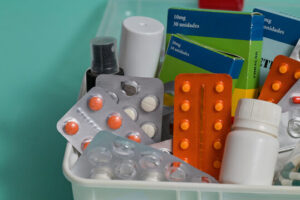
A Little Organization Can Make All the Difference
Medicine safety is more than taking the right dose at the right time. Another aspect of safe use of medicines is storage.
Having a dry and stable storage area, regular expiry-date checks, original packaging and safe disposal of unwanted medicines can avoid a number of avoidable problems. Always follow special storage instructions as different medicines have different requirements.
For those on multiple medications, it’s also good to ask a pharmacist about storage, handling and disposal when in doubt. A simple question often stops a mistake from happening.
Health information can help people make better decisions. However, people should always talk with a doctor or pharmacist about medicine-specific concerns, especially when a medicine looks damaged, has not been stored properly, or has unclear instructions.